mdoc-otiscom is the official web address and digital gateway to Michigan’s Offender Tracking Information System (OTIS), a real-time public database managed by the Michigan Department of Corrections. This system gives instant access to verified records on individuals currently under MDOC supervision—including those in prison, on parole, or on probation—as well as people released from supervision within the past three years. Every night, OTIS updates with fresh data pulled directly from court filings, state police records, and correctional facility logs. Users can search by name, date of birth, or MDOC number to view custody status, sentence details, parole eligibility, facility location, and supervising officer contact info. The platform exists so families, legal professionals, researchers, and concerned citizens can confirm an offender’s legal standing quickly and accurately.
What Is OTIS and Why It Matters
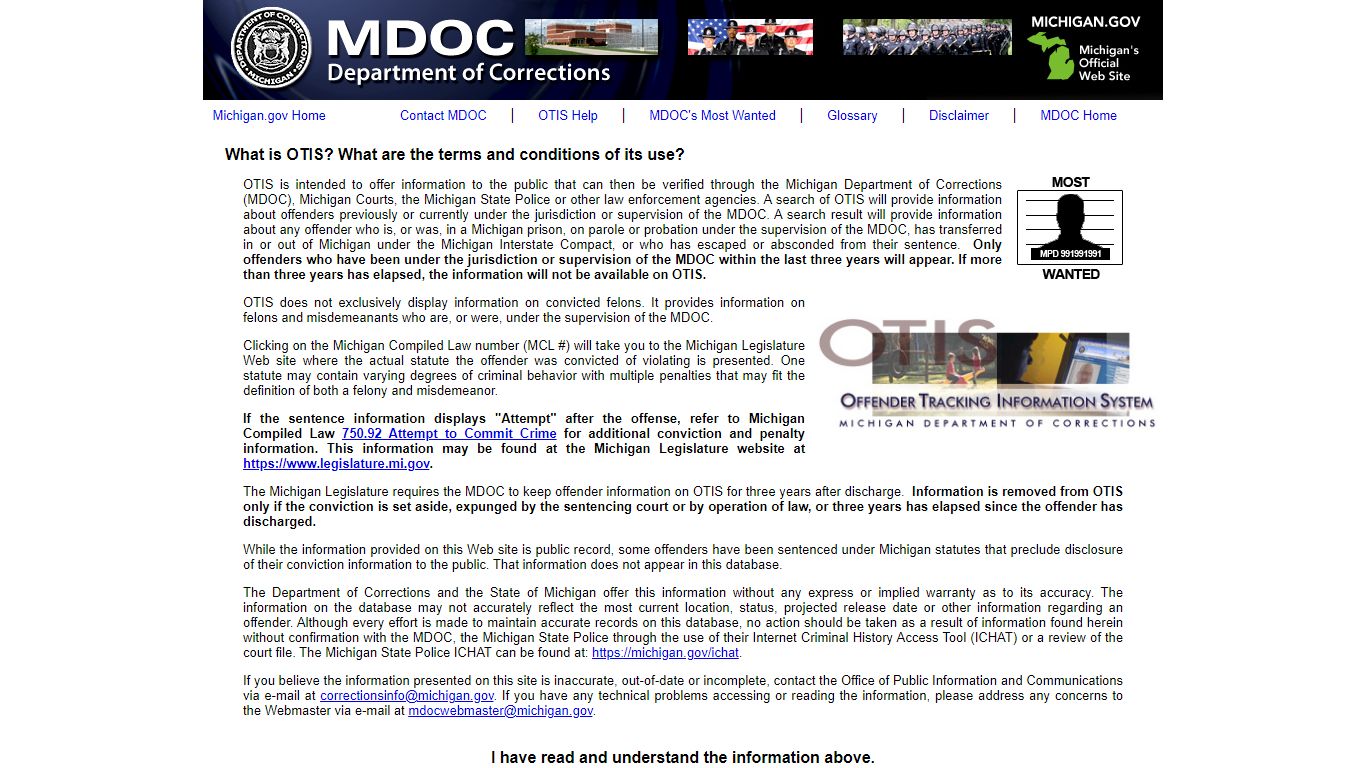
The Offender Tracking Information System (OTIS) serves as Michigan’s central hub for public offender data. Unlike third-party sites that may show outdated or incomplete information, OTIS pulls directly from authoritative sources: the Michigan Department of Corrections, Circuit Courts, and State Police. This ensures every record reflects the most current legal status. Whether you’re checking on a family member, verifying someone’s parole status for employment, or researching local crime trends, OTIS provides reliable, government-backed facts—not rumors or guesses. The system also helps prevent identity confusion by using unique MDOC numbers, which are assigned to each person entering the correctional system and stay with them throughout their sentence.
How to Use mdoc-otiscom Effectively
To search mdoc-otiscom, go to the official OTIS portal and enter either the offender’s MDOC number—the fastest and most accurate method—or their full name and date of birth. If using names, spelling must be exact; the system does not correct typos or handle nicknames. For common surnames, narrow results by adding the sentencing county, offense year, or parole officer badge number. After submitting your query, review the returned profile carefully. It will list the inmate’s current facility, sentence length, conviction charges, parole eligibility date, and any pending obligations like restitution or community service. Always cross-check critical details with the court docket or MDOC directly if making important decisions based on this data.
Key Data Fields Explained
Each OTIS profile includes several standardized columns that help users interpret an offender’s status. The “MDOC Number” is a unique ID that never changes, even if the person moves between facilities. “Custody Level” shows security classification—Level I (minimum), II (medium), III (close), or IV (maximum)—based on risk assessments. “Sentence Type” distinguishes between determinate (fixed end date) and indeterminate (parole-based release) sentences. “Parole Eligibility Date” indicates when the offender can first appear before the parole board, but approval isn’t guaranteed. “Supervising Officer” lists the parole agent’s name and phone number for probationers. Understanding these fields prevents misinterpretation—for example, someone listed as “eligible” doesn’t mean they’ve been released.
Privacy Rules and Record Retention
Michigan law limits how long OTIS keeps records after supervision ends. Once an offender completes parole or probation and three years pass, their profile is removed from public view to protect privacy. However, aggregate statistics—like total parolees per year or average sentence lengths—remain available for research and policy analysis. This balance ensures transparency while respecting rehabilitation rights. OTIS does not display sensitive details such as medical history, mental health diagnoses, or victim information. All data shared complies with state and federal privacy statutes, including the Michigan Freedom of Information Act (FOIA) exemptions for personal safety and ongoing investigations.
Common Search Mistakes and How to Avoid Them
Many users struggle with OTIS searches due to simple errors. The top mistake is misspelling a name—OTIS won’t suggest corrections or show partial matches. Another issue is searching without a date of birth, which leads to long lists of people with the same name. To fix this, always use the MDOC number if known. If not, include the birth date and sentencing county. Also, avoid assuming “active” means incarcerated—some profiles show parolees living in the community. Lastly, don’t confuse OTIS with county jails; it only covers state-level offenders. County inmates must be searched through local sheriff websites. Double-checking your inputs saves time and prevents misinformation.
OTIS vs. Third-Party Inmate Sites: What’s the Difference?
While sites like MichiganPublicRecords.org aggregate OTIS data, they often add outdated records, ads, or unverified claims. Only mdoc-otiscom provides live, official updates directly from MDOC systems. Third-party platforms may charge fees, delay updates, or mix in federal or out-of-state inmates not under Michigan’s jurisdiction. For legal, employment, or safety purposes, always verify information through the official OTIS portal. Government sites also explain field meanings and offer guidance—something commercial databases rarely do. Relying on non-official sources risks acting on false or incomplete data, which could have serious consequences.

Who Uses OTIS and Why
OTIS serves a wide range of users. Families track loved ones’ locations and release dates. Employers conduct background checks for hiring. Landlords screen potential tenants. Law enforcement verifies parole conditions during investigations. Researchers study sentencing patterns and recidivism rates. Attorneys confirm client statuses for court filings. Even journalists use OTIS to report accurately on local crime. Because the system is free, public, and updated nightly, it’s the most trusted source for Michigan offender data. No login or registration is required—just visit the site and search.
Technical Features and Accessibility
The OTIS interface is designed for simplicity. It works on mobile phones, tablets, and computers without requiring special software. Results load quickly, even on slow connections. Profiles display in clear tables with labeled columns, making them easy to read. The site supports screen readers and follows basic web accessibility standards. However, it does not offer downloadable reports or API access—users must manually copy information. For bulk data requests, submit a FOIA application to MDOC. The system also lacks predictive features like release date calculators; all dates are set by courts or parole boards.
Legal Accuracy and Verification Steps
While OTIS is highly reliable, it’s not infallible. Rarely, data entry errors occur—such as wrong facility assignments or typos in names. To confirm accuracy, always cross-reference the MDOC number with the official MDOC website or call the inmate’s assigned facility. For court-specific details like charge codes or sentencing documents, contact the clerk of courts in the county where the conviction occurred. OTIS shows the current status but doesn’t replace official court records. When in doubt, use OTIS as a starting point, then verify with primary sources before taking action.
Historical Context and System Evolution
OTIS launched in the early 2000s to replace paper-based tracking and improve public access to correctional data. Over time, it expanded from basic inmate locators to comprehensive profiles including parole info, sentence breakdowns, and officer contacts. Recent upgrades added nightly syncs with court databases and improved mobile responsiveness. Despite these advances, OTIS remains focused on core functions—not analytics or forecasting. It reflects Michigan’s commitment to transparency while balancing privacy concerns. Future updates may include multilingual support or enhanced filtering, but no major changes are currently announced.
Limitations and What OTIS Doesn’t Show
OTIS has clear boundaries. It does not list federal inmates, county jail detainees, or juveniles (who are under a separate system). It won’t show visitation schedules, commissary balances, or medical records. Arrests without convictions aren’t included—only sentenced offenders appear. Additionally, records older than three years post-supervision are deleted per state law. If you can’t find someone, they may be in a local jail, out of state, or beyond the retention period. Always consider these limits when interpreting search results.
Contacting MDOC for Help
If you encounter issues with OTIS—such as missing records, technical errors, or questions about data—contact the Michigan Department of Corrections directly. The main phone line connects callers to the appropriate division. For inmate-specific concerns, use the “Contact MDOC” portal on their official site. The Wellness Unit assists staff and families but cannot help with inmate searches. Always have the MDOC number ready when calling—it speeds up responses. MDOC offices operate Monday through Friday, excluding state holidays.
Official Website: https://www.michigan.gov/corrections Phone: (517) 335-1426 Address: 206 E. Michigan Ave, Lansing, MI 48909 Visiting Hours: By appointment only for non-public matters
Frequently Asked Questions
People often have specific questions about mdoc-otiscom that go beyond basic search instructions. Below are detailed answers to the most common and strategic inquiries, covering nuances, edge cases, and legal considerations that help users get the most accurate and useful information from the system.
Can I use OTIS to find someone arrested but not yet sentenced?
No, OTIS only includes individuals who have been convicted and sentenced by a Michigan court. If someone was arrested but not charged, acquitted, or is awaiting trial, they will not appear in OTIS. These individuals may be held in county jails, which operate separate inmate locators. To find someone in pretrial detention, contact the local sheriff’s office or visit their website. OTIS begins tracking offenders only after formal sentencing and transfer to MDOC custody. This ensures the database reflects final judicial outcomes, not accusations or temporary holds.
Why does OTIS remove records after three years?
Michigan law requires OTIS to delete profiles of offenders who completed supervision (parole or probation) more than three years ago. This protects privacy and supports rehabilitation by limiting public exposure of past convictions once individuals reintegrate into society. The rule balances transparency with fairness—people who served their time shouldn’t face lifelong digital stigma. However, statistical summaries (like total parolees per year) remain public for research. If you need older records, submit a FOIA request to MDOC, though some details may be redacted for privacy.
Is the parole eligibility date a guarantee of release?
No, the parole eligibility date shown in OTIS is the earliest day an offender can appear before the Michigan Parole Board—it does not guarantee release. The board reviews behavior, rehabilitation progress, victim input, and risk assessments before deciding. Many eligible inmates remain incarcerated if they don’t meet standards. OTIS lists the date for informational purposes only. Families and employers should not assume freedom based on this field. For real-time updates on parole decisions, contact the Parole Board directly or monitor court dockets.
Can I download or print an OTIS profile?
OTIS does not offer a built-in download or print function. Users must manually copy information or take screenshots. This design prevents misuse of sensitive data and ensures each viewer sees the most current version. For official documentation (e.g., court filings), request certified records from the sentencing court or MDOC’s records division. Unofficial prints from OTIS may be accepted for informal use but lack legal certification. Always verify critical details with primary sources before relying on printed OTIS data.
What if I find incorrect information in OTIS?
If you spot errors—such as wrong names, dates, or facility assignments—report them immediately to MDOC via their contact portal or phone line. Include the MDOC number and specific correction needed. While OTIS updates nightly from trusted sources, human or system errors can occur. MDOC investigates all reports and corrects verified mistakes within days. Do not rely on third-party sites to fix errors—they pull from OTIS and will repeat the same inaccuracies. Only the official agency can update the source data.
Does OTIS include out-of-state or federal inmates?
No, OTIS covers only individuals under Michigan Department of Corrections jurisdiction. Federal inmates are tracked by the Bureau of Prisons’ online locator. Out-of-state prisoners transferred to Michigan appear in OTIS, but Michigan inmates moved to other states do not. For interstate cases, use the National Sex Offender Public Website or contact the receiving state’s corrections department. OTIS is strictly a state-level tool for Michigan-specific records.
How often is OTIS updated and who provides the data?
OTIS refreshes every night using automated feeds from the Michigan State Police, Circuit Courts, and MDOC facilities. This ensures near-real-time accuracy for custody status, transfers, and parole updates. Data sources are government-operated and legally mandated to share information with MDOC. Unlike commercial databases that scrape or estimate, OTIS relies on direct institutional partnerships. Nightly updates mean changes (like a new parole date) appear by the next morning. No manual entry is involved, reducing human error.